The Pain-point: What Market Research Tells Us
90% of analysts still rebuild statements by hand in Excel, re-keying data from 10-Q/10-K filings, CapIQ, Bloomberg, FactSet and raw filings just to read them the same way.
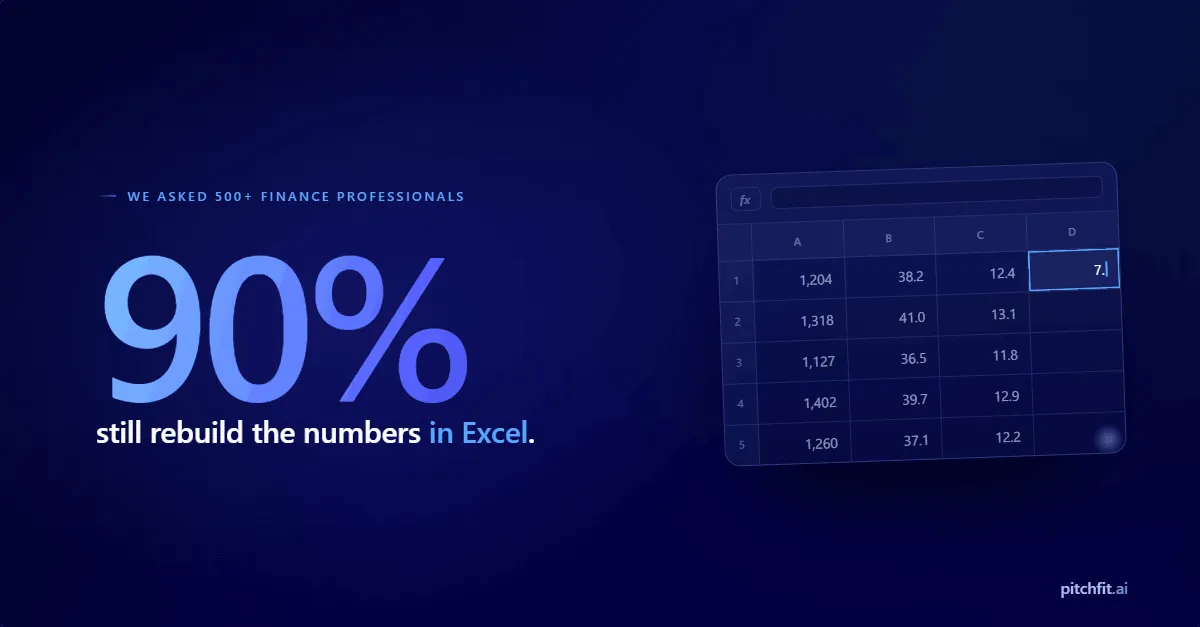
still rebuild statements by hand in Excel just to read them the same way.
say the same line item is classified differently from one company to the next.
cite calendarisation as a pain before any comparison can begin.
We wanted to know how finance teams actually work - not how the software brochures say they do. So we asked. More than five hundred analysts, controllers and heads of FP&A, across banks, funds and corporates, answered one blunt question: when you need to compare two companies, what do you do first?
The answer, overwhelmingly, was a version of the same thing. Ninety percent still rebuild the statements by hand in Excel - re-keying figures from 10-K and 10-Q filings, CapIQ, Bloomberg and FactSet - not to model anything yet, but simply to read the numbers the same way.
The same line, classified three ways
Re-keying is tedious, but it is not the real problem. The real problem is what people do while they re-key: they quietly decide what each line means. One in two told us the same line item is classified differently from one company to the next - a lease here, a provision there, an item that sits above the operating line in one filing and below it in another.
Each of those decisions is defensible. Together they mean two analysts can pull the identical filing and still produce two different companies - before a single ratio is computed.
Half the work happens before the work
Roughly half cited calendarisation - aligning mismatched fiscal years and reporting periods - as a chore they have to finish before any comparison can even begin. Add currency, add restatements, add the slow detective work of finding which note explains which number, and the “analysis” has not started yet.
What the rebuild really costs
The cost is not mainly the hours, though the hours are real. It is that every rebuild is private. Each analyst standardizes in their own head, in their own sheet, and the assumptions never travel with the answer. So when two numbers disagree, no one can see why - and the debate moves to who is most senior rather than which basis is right.
That is the pain-point underneath the survey. It is not access to data; the data has never been more available. It is the absence of one defensible basis everyone reads from. PitchFit exists to supply exactly that - every statement standardized one way, every figure traced back to its source.